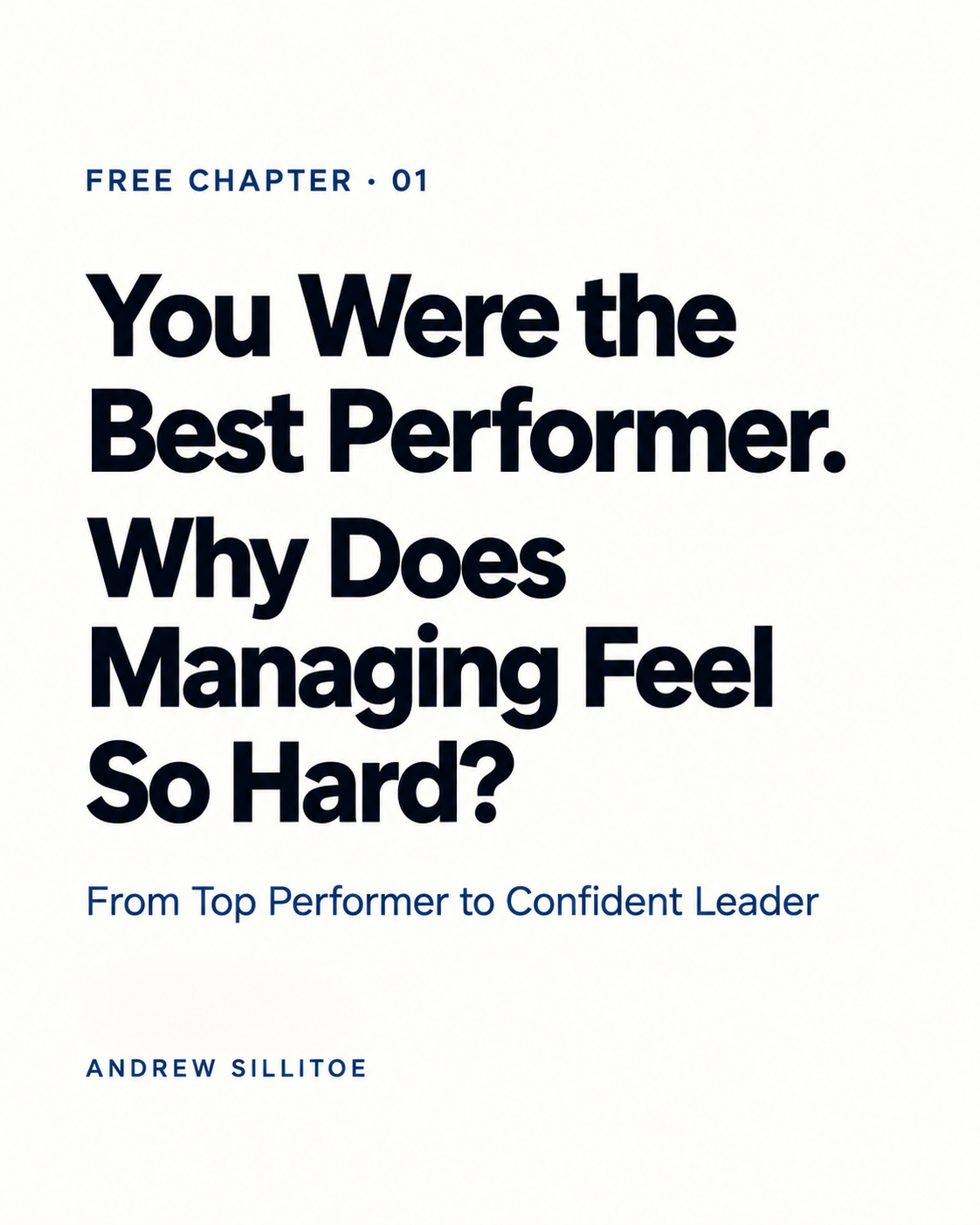
Make the shift from doing the work to leading the people who do it.
Leading people is a different job.
Discover why the habits that made you a top performer can make managing feel so difficult—and learn how to stop proving your value by doing everything yourself. Chapter One will help you begin the shift from delivering results personally to creating the clarity, confidence and responsibility your team needs to deliver them with you.
The Trap New Managers Fall Into
You were probably promoted because you were good at what you did.
You knew what good looked like.
You could solve difficult problems.
People trusted you to deliver.
Then you became responsible for a team.
Suddenly, your results depended on other people.
That is when the mist can start to roll in.
Your team asks you what to do.
Work comes back below the standard you expected.
Delegating takes longer than doing it yourself.
So you become more involved.
You answer the questions.
You correct the work.
You step in when deadlines are approaching.
It makes sense.
You are trying to help the team succeed.
But the more problems you solve for people, the more dependent they become on you.
You work harder.
Your team waits for direction.
And there is never enough time to do the leadership work you were promoted to do.
This is not because you are failing.
You are learning a new job.
The skills that made you an excellent performer are not necessarily the skills that will make you an effective leader.
I Have Been There
I have spent more than 20 years building and leading teams in business and international sport.
I have also made many of the mistakes I now help other leaders avoid.
When the pressure increased, I became more involved.
I gave people answers because it felt quicker.
I held on to work because I knew I could do it properly.
I believed leadership meant knowing what to do and making sure everyone else did it.
What I eventually learned was that my team did not always need more instructions from me.
They needed clarity.
They needed responsibility.
They needed the confidence to think and act without waiting for my permission.
And I needed to stop measuring my value by how many problems I could solve personally.
That is one of the most difficult transitions a high performer has to make.
Leadership Is Not Doing More
The purpose of leadership is not to become the hardest-working person on the team.
It is to create an environment in which other people can perform.
That means learning how to:
Set clear expectations without controlling every detail.
Delegate responsibility rather than passing over tasks.
Ask questions instead of immediately providing answers.
Give feedback before frustration begins to build.
Hold people accountable without losing their trust.
Step away from your old job and begin doing the new one.
These skills can be learned.
You do not need to change your personality or become somebody you are not.
But you do need to change where you focus your attention.
The free chapter will help you begin.
What’s Inside?
The complete chapter: Your Team Comes to You for Every Answer
You will discover why capable people become dependent on their manager—and how your own behaviour may be unintentionally encouraging it.
1. A practical conversation to use with your team
A simple way to respond when somebody brings you a problem, without taking the responsibility away from them.
2. Your leadership action
One change you can make this week to create greater ownership within your team.
3. Reflection questions
Questions to help you recognise where you may still be operating as the top performer rather than the leader.
Read it in 10 minutes.
Use it with your team the same day.
When You’re Ready for More…
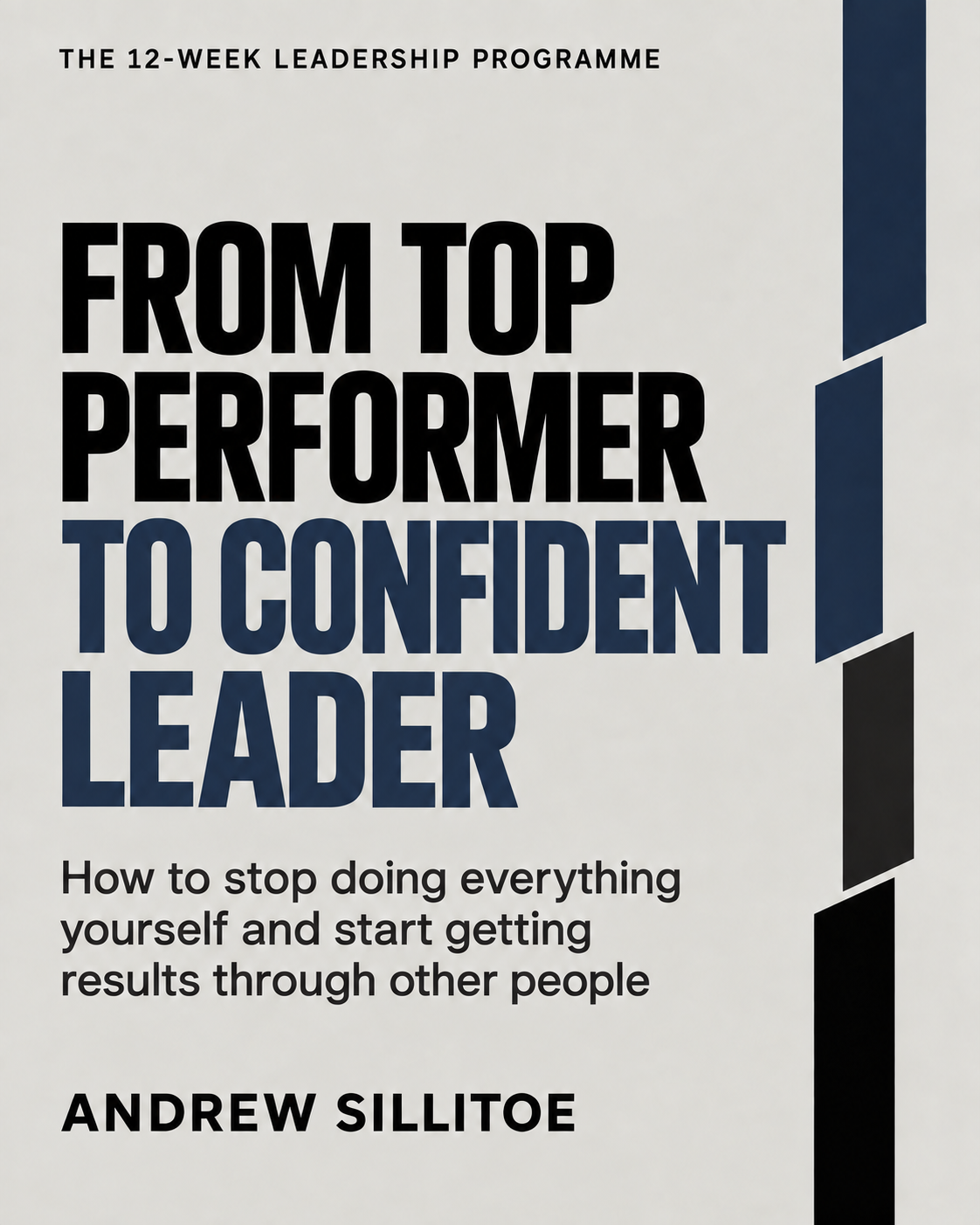
A practical 12-week programme for people who were promoted because they were excellent at their work—and discovered that getting results through other people requires a completely different approach.
The programme will help you:
Stop being the answer to every problem.
Delegate without feeling as though you are losing control.
Lead people who used to be your peers.
Give feedback when something needs to change.
Create accountability without micromanaging.
Build a team that can perform without depending on you.
You will receive immediate access to all 12 chapters, so you can find help with the problem you are facing today.
You can also follow the programme one week at a time, completing one practical leadership action after each chapter.
Things You May Be Thinking.
-
Yes. You will receive one complete chapter and its practical leadership exercise. I will also send you a couple of useful emails each month. You can unsubscribe whenever you like.Is this only for new managers?
It is written for people making the transition from individual performer to leader. However, it will also help experienced managers who still find themselves carrying too much of their team’s work.
-
You can read the chapter in approximately 10 minutes. The important part is the action you take afterwards.
-
No. It is a practical guide based on more than 20 years of building teams in business and elite sport. Every chapter ends with something you can use in your work.
-
That is exactly why the programme is short and practical. You do not need another qualification. You need a clearer way to handle the leadership situations already in front of you.
One chapter. One practical leadership action. A couple of emails from me each month.
-
Collaborative, honest, and straightforward. We're here to guide the process, bring ideas to the table, and keep things moving.