Why You Panic With the Puck (And How to Stay Calm Under Pressure)
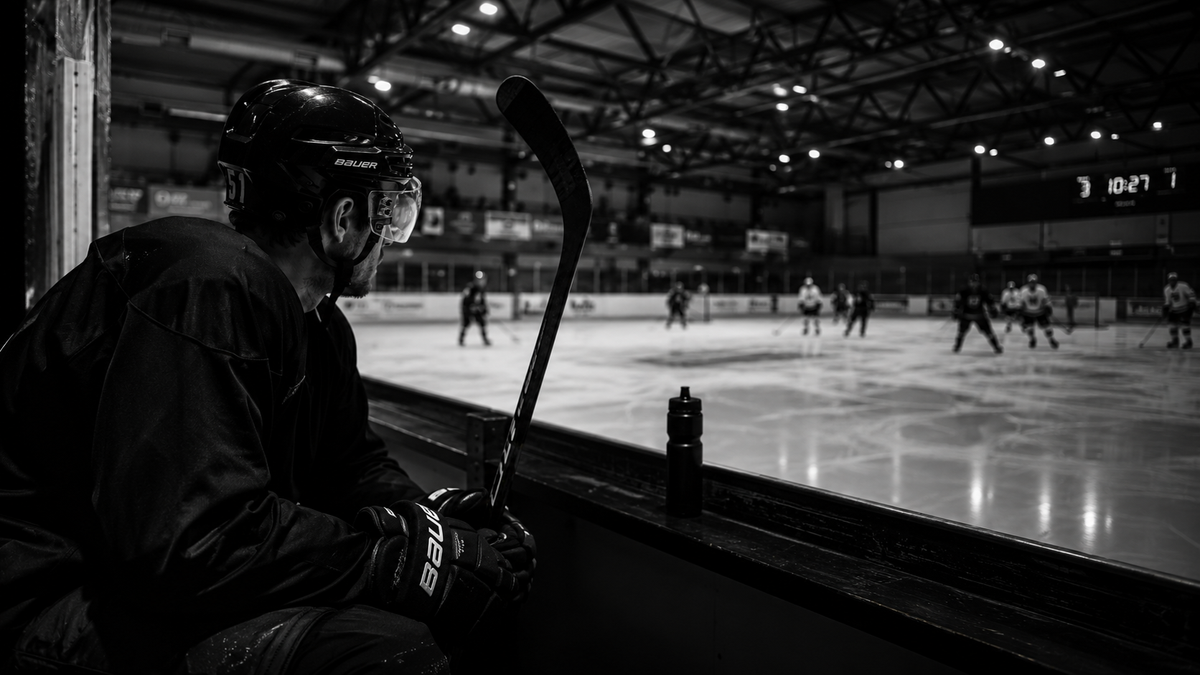
If you've ever collected the puck, looked up and felt your heart rate double, you're not alone.
You know the feeling.
You receive a pass cleanly. For a split second, everything is under control. Then the forechecker closes the gap. Suddenly, your stick feels heavy. Your vision narrows. You rush the pass, throw the puck away or freeze completely.
A few seconds later you're gliding back to the bench thinking:
"Why do I always do that?"
The frustrating part is that you know you're capable of more. You make great plays in warm-ups. You execute the drill perfectly in practice. But when the pressure arrives, it's as if someone else takes over.
For years, I thought the problem was my skill.
I believed I needed softer hands, better stickhandling or quicker feet. So I spent more time practising those things.
Of course, skills matter.
But eventually I realised something important.
The biggest difference between practice and games wasn't my ability.
It was my mind.
When we're under pressure, our brain naturally shifts into protection mode. Instead of seeing the whole ice, we become fixated on the nearest opponent, the fear of making a mistake or the voice in our head telling us not to lose the puck.
Ironically, the harder we try to avoid making a mistake, the more likely we are to make one.
I've seen it as a player.
I've seen it as an international coach.
And I've seen it in countless adult hockey players who are far more talented than they believe.
Confidence isn't something you magically find before the game.
It's something you build by repeatedly putting yourself in situations that stretch you without overwhelming you.
That's one reason I still love playing hockey in my fifties.
Every game is an opportunity to practise staying calm.
Every shift is a chance to focus on the next play instead of the last mistake.
Over time, I've learned a simple approach that helps me reset.
As I skate onto the ice, I remind myself of one thing:
See the game. Don't chase it.
Instead of staring at the player closing me down, I scan the ice before the puck arrives. I take one look over each shoulder. I notice my options. Then, when I receive the puck, I already know what I want to do.
That one habit changes everything.
It slows the game down.
It gives me confidence.
It allows my skills to emerge instead of forcing them.
The players who look calm under pressure aren't necessarily the most gifted.
They're often the players who have learned to trust themselves.
If you constantly judge every mistake, you'll become hesitant.
If you learn from each shift and move on, you'll become freer.
And free players make better decisions.
The next time you step onto the ice, don't focus on making the perfect play.
Focus on making the next play.
One good decision.
Then another.
Then another.
Confidence isn't built by never making mistakes.
It's built by trusting yourself enough to keep playing after you do.
🖤 Train Your Mind. Improve Your Game.
Our hockey camps in Prague are built around three pillars:
Longevity. Mindset. Skills.
If you want to become calmer with the puck, make better decisions under pressure and enjoy the game more, we'd love to welcome you.