When Leadership Stops Being Performance
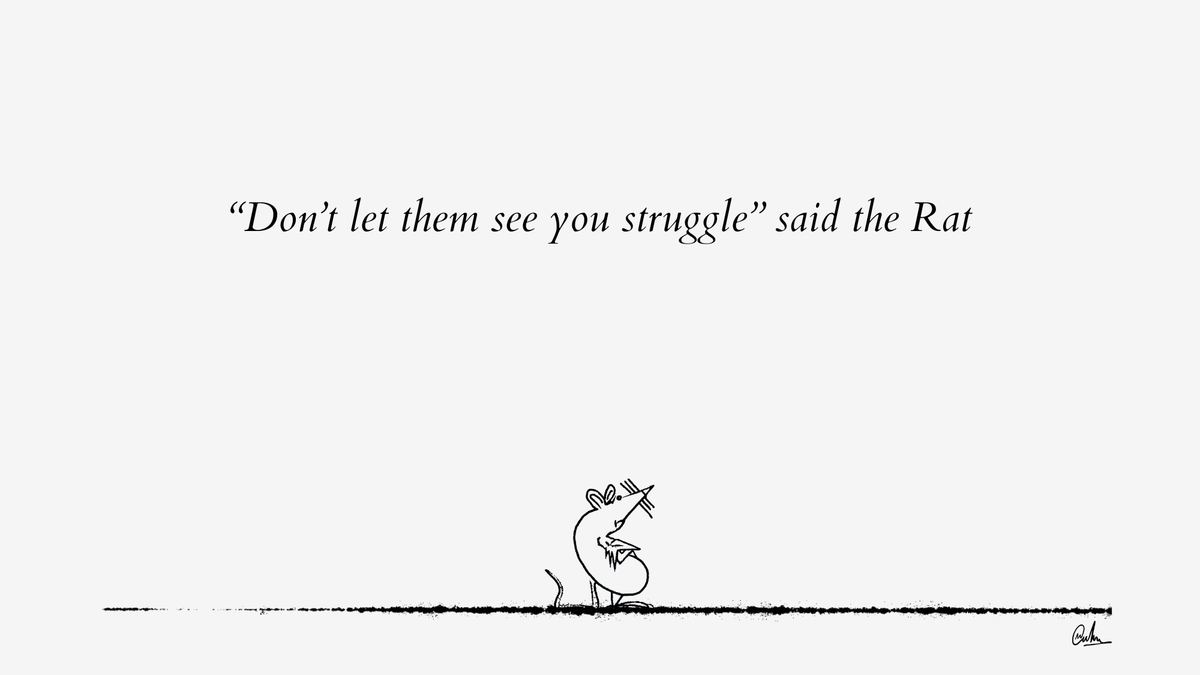
This is what changes when leaders 'do the work.'
At first, nothing obvious.
From the outside, they’re still leading the business, making decisions, showing up in the same meetings. The responsibilities don’t go anywhere.
But something underneath begins to shift.
Most leaders I work with have spent years learning how to perform competently. They know what to say, how to say it, and how to carry themselves. They’ve built trust by being consistent, reliable, and in control.
It works.
Until it doesn’t.
Because over time, that performance becomes something else. It stops being a skill and starts becoming an identity. You become the one who holds things together. The one people rely on. The one who doesn’t drop the ball.
And the voice that supports that — the one I call the Rat — gets louder.
Stay sharp.
Don’t slow down.
Don’t let them see you struggle.
It doesn’t sound like fear. It sounds like responsibility.
That’s the problem.
So leaders keep going. They keep carrying. They keep stepping in, even when they don’t need to. Not because they want control, but because something in them doesn’t feel safe without it.
And slowly, without realising it, they become the only one who can.
The shift doesn’t come from trying to change that.
It comes from noticing it.
In the work we do, we don’t try to fix behaviour or install new strategies. We stay with real situations — a decision that’s stuck, a conversation that’s being avoided, a tension that keeps repeating.
And we slow it down.
Just enough to see clearly what’s actually happening.
That’s usually when the leader first hears the Rat as a voice, rather than the truth.
And alongside it, something quieter begins to appear.
A different part of them. What I call the Wren.
It doesn’t push. It doesn’t rush. It asks better questions.
- What are you trying to protect here?
- What would happen if you didn’t step in
- What’s actually needed right now?
Nothing dramatic happens in those moments.
But something loosens.
They begin to pause, even briefly, before reacting. They start to see where they’re holding too much, where they’re stepping in too quickly, where they’re carrying what isn’t theirs.
And over time, that changes how they lead.
They speak less, but with more weight.
They listen longer, and hear more.
They don’t rush to fill space or prove they have the answer.
The team feels it.
Because the leader is no longer trying to manage everything.
They’re creating space for others to step forward.
At home, the shift is often more noticeable.
They’re not as distracted. Not because life is quieter, but because they’re not carrying the same internal noise. They’re more available. More present.
Not perfect.
But there.
What’s changed isn’t the workload.
It’s the relationship with it.
They’re still responsible. Still leading. Still making decisions.
But they’re no longer being driven by the need to hold everything together.
They’ve stopped carrying what isn’t theirs.
And for the first time, the same person shows up — at work, at home, and on their own.
Not in exactly the same way.
But without contradiction.
Nothing was fixed.
Everything was noticed.
And that’s what changed everything.
If this resonates, book a 1-hour session, and we’ll talk it through.