The walk to school is silent. My wife and I are side by side but miles apart. The kids sense it. They always sense it.
The morning started fine. It always starts fine. Coffee on. Kids getting dressed. The illusion of a household that runs smoothly.
Then the 8-year-old hit his sister. She screamed. He denied it. She screamed louder. The youngest started crying because the screaming woke him. The porridge got knocked over. And now my wife and I are having an argument in the kitchen that neither of us intended, half-whispered, half-hissed, in that particular register married couples use when they're furious but trying not to let the children see.
Except the children always see.
My daughter is watching from the doorway. Not scared. Just still. The way children go still when the adults stop being safe.
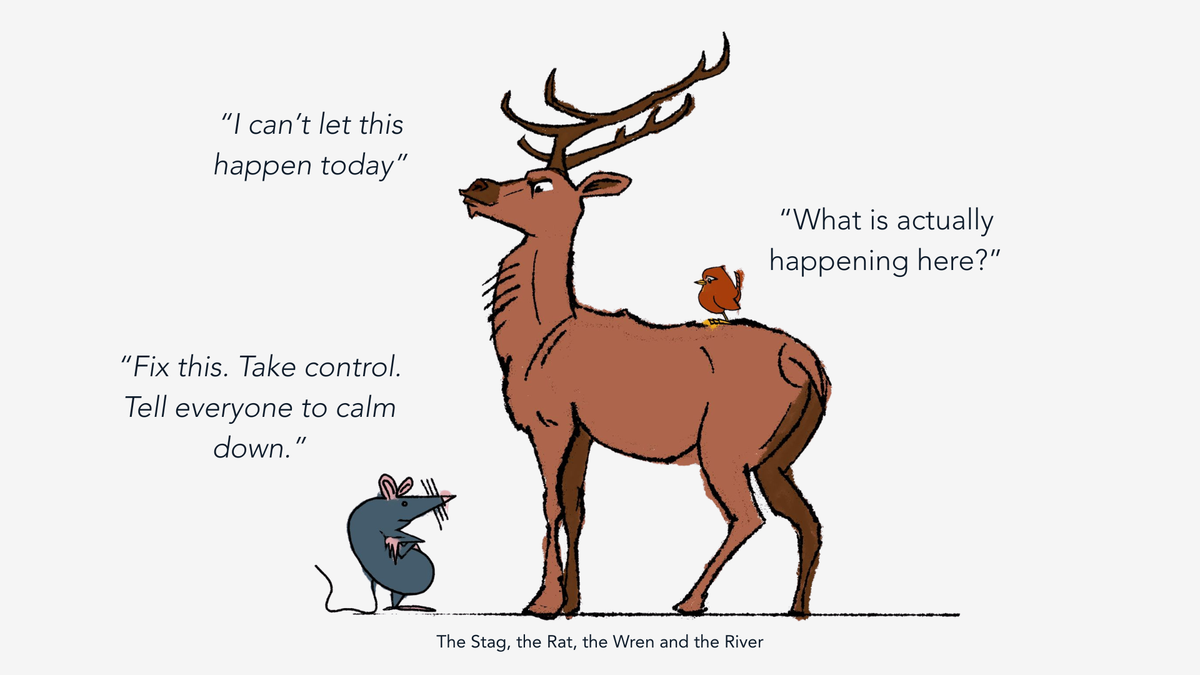
The Rat is screaming. Fix this. Take control. Tell everyone to calm down. Be the steady one. Hold it together. You have a meeting at nine. You don't have time for this.
So I do what the Rat says. I go cold. I go efficient. I become the manager of the household instead of the father in it. Shoes on. Bags packed. Coats. We're leaving in three minutes. Nobody is talking.
The walk to school is silent. My wife and I are side by side but miles apart. The kids sense it. They always sense it. My daughter holds my hand tighter than usual. My son kicks a stone the entire way. The 3-year-old is the only one who seems fine, because he doesn't yet know that silence between parents is louder than shouting.
I drop them at school. I smile at the teacher. I say something broken Czech. I perform being fine.
Then I walk to my meeting and the tension sits in my chest like a stone I swallowed.
This is the part no one talks about.
Leadership books talk about pressure in the boardroom. Executive coaches talk about difficult conversations at work. Performance psychologists talk about staying in the zone under pressure.
Nobody talks about the 7:45am argument that you carry into every conversation for the rest of the day.
I sat in my meeting at nine o'clock and I was not there. My body was there. My face was doing the right things. But inside I was still in the kitchen. Still replaying what I said. What she said. What I should have said. Whether my daughter was okay. Whether my son understood.
The Rat had two tracks running simultaneously. Track one: you need to focus on this meeting, it matters, be professional. Track two: you handled the morning badly, you were cold, you shut down, she's upset, you need to fix this.
Neither track was useful. Both were loud.
This is what I mean when I say the conversations that matter most aren't at work.
The meeting went fine. It always goes fine. I've spent decades learning how to perform under pressure. I can run a session with a stone in my chest and no one will notice.
But my wife noticed this morning. My daughter noticed. And I noticed — later, sitting on the bench by the river, that I'd done the thing again. The thing the Rat tells me is strength.
I went cold. I went efficient. I managed the situation instead of being in it.
The argument wasn't the problem. Every couple argues. Every household with small children has mornings that fall apart. The spilled porridge, the fighting siblings, the impossible logistics of getting five people out the door — that's not dysfunction. That's life with children.
The problem was what I did with the tension.
I froze it. I packed it away. I put on the armour and walked to school with my family as if everything was fine. And I carried that frozen thing into every conversation I had for the rest of the day.
The Wren would have asked a different question at 7:45am. Not "how do I fix this?" but "what's actually happening here?"
What was actually happening was that my wife was overwhelmed and I was overwhelmed and instead of saying that — instead of one of us saying "this is too much right now" — we went to war over something that didn't matter. Who said what to the kids. Who wasn't helping. The content of the argument was irrelevant. The content is always irrelevant. What mattered was that two people who love each other were drowning in the morning and neither one could say it.
If I'd had one second of River, one breath, one pause, one moment of not reacting — I could have said: "We're both drowning. Let's just get through this and talk later."
That's it. That's all it would have taken. Not a resolution. Not a fix. Just an honest naming of what was happening instead of performing control over it.
I texted her at lunchtime. "I'm sorry about this morning. I shut down. I shouldn't have."
She replied: "I know. Me too. Coffee?"
That's how repair works. Not grand gestures. Not long conversations. A text that says I see what I did and a reply that says I did it too.
The Rat will tell you that apologising is weakness. That you were right. That she started it. That you had a meeting to get to.
The River says: just name it. The repair is in the naming.
If you're an expat in Prague with small children, your mornings are chaos. That's not a problem to solve. It's a life to be in. The question isn't how to make the mornings smoother. The question is what you do with the tension when they're not.
Do you freeze it and carry it into your day? Or do you name it and let it go?
I'm still learning. Most mornings, we get it right. But the mornings I get it wrong — I am learning to pause long enough to say "this is hard" instead of going cold.
Those are the mornings my daughter doesn't hold my hand tighter than usual on the walk to school.
I'm Andrew Sillitoe. I help leaders have better conversations. If this resonated, you can find more at andrewsillitoe.com.