Let go of control and find the path you were meant to walk.
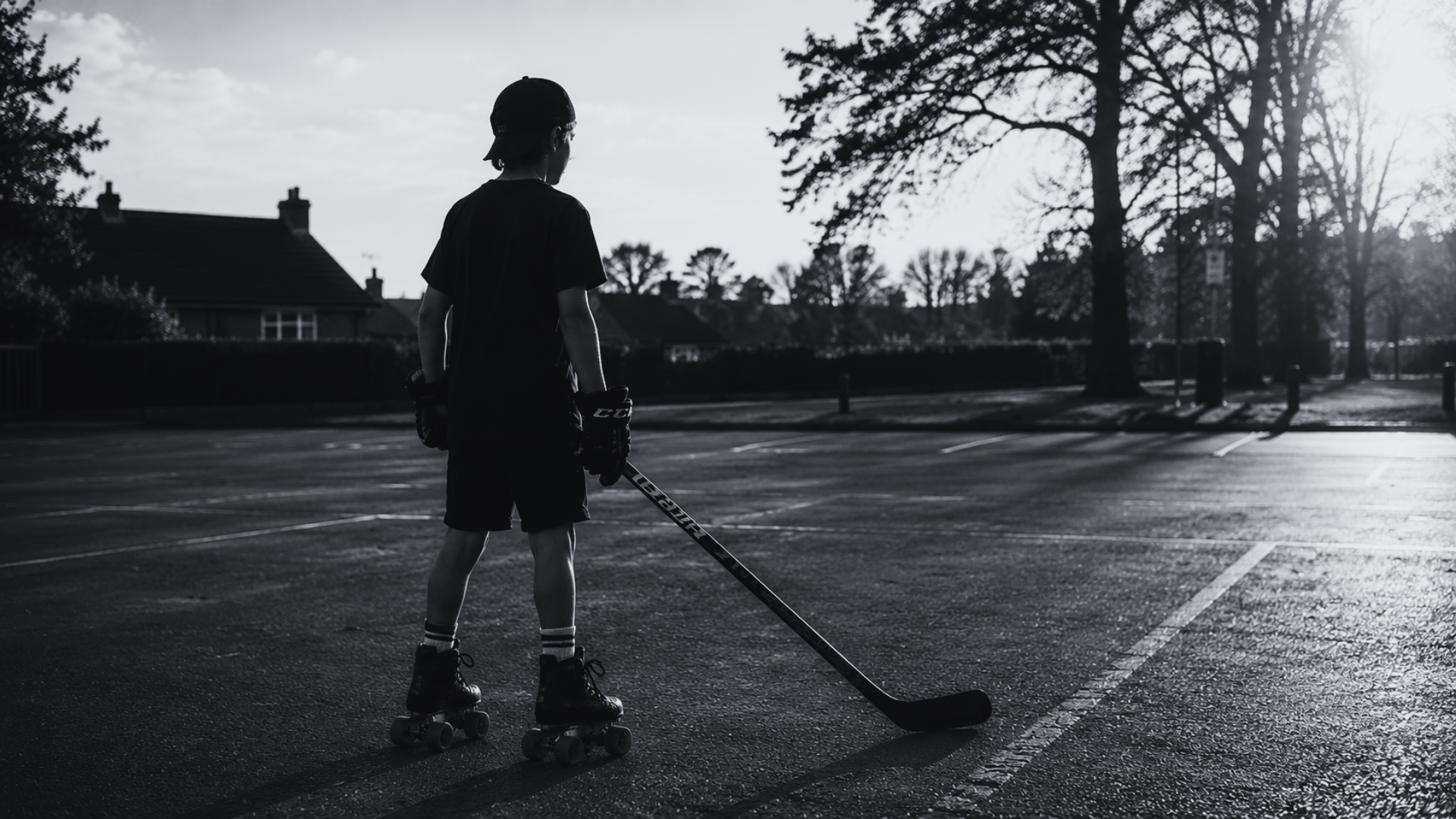
I was nine years old when my mum bought me my first street hockey stick.
The moment I picked it up, something happened that I have never been able to fully explain. A lightning bolt. A recognition. Standing on roller skates with that stick in my hands felt like the most natural thing I had ever done — as if some part of me had been waiting for it without knowing what it was waiting for.
Maybe you have a moment like that. The first time you touched a ball, picked up a pen, walked into a room and knew you belonged there. The first time something outside you felt like an extension of something inside you.
That moment when time stood still.
When nothing existed except you and the thing in front of you.
No fear. No self-consciousness. No voice telling you that you weren't good enough.
Just flow.
I have spent the rest of my life trying to find my way back to that feeling.
In the years that followed, I was obsessed. Playing every day after school, all day at the weekend. Playing wherever the game took me. Hockey wasn't something I did. It was who I was.
Then my life changed forever.
On March 21st 1993, at the age of 16, I was sitting in an armchair watching television.
My father said goodnight.
That was the last time I saw him.
A heart attack. Sudden. No warning. No goodbye.
Just there, and then not there.
The weeks that followed are a blur. What I remember most is the feeling. Not the grief exactly, though that was there, enormous and shapeless. Something underneath the grief.
Lost.
I was completely, utterly lost.
I didn't know who I was without him. I didn't know how to navigate a world that could remove someone that important without warning or reason or any apparent logic. I didn't know what to do with the silence he left behind.
So I did what lost people sometimes do.
I threw myself into hockey. Training harder than I needed to. Competing with an intensity that had nothing to do with the game and everything to do with not sitting still long enough to feel what I was carrying.
And I started looking.
I became obsessed with understanding why life could change so completely overnight.
I sat with those books trying to find what my father could no longer give me. I read Plato, How to Win Friends and Influence People, and The Celestine Prophecy. I was looking for a framework for why things happen. Whether loss has meaning. Whether the world has any order to it at all when the people you love most can simply disappear in the night.
I didn't find the answers I was looking for.
But I found something else.
Looking back, I can see that those questions were leading me somewhere I couldn't yet understand. Years later I would realise there are things beyond our control, and that fighting that truth creates more suffering than the truth itself.
At twenty-one, my brother handed me a book before I flew to Vancouver with almost nothing. A one-way ticket, a bag of hockey gear, and no plan beyond finding a rink. The book was The Road Less Travelled by Scott Peck. I read it on the plane. His opening line stopped me cold.
"Life is difficult."
Not life is manageable. Not life rewards the prepared. Not life responds to effort and discipline and positive thinking.
Life is difficult. And the sooner you stop fighting that, the sooner you can actually live it.
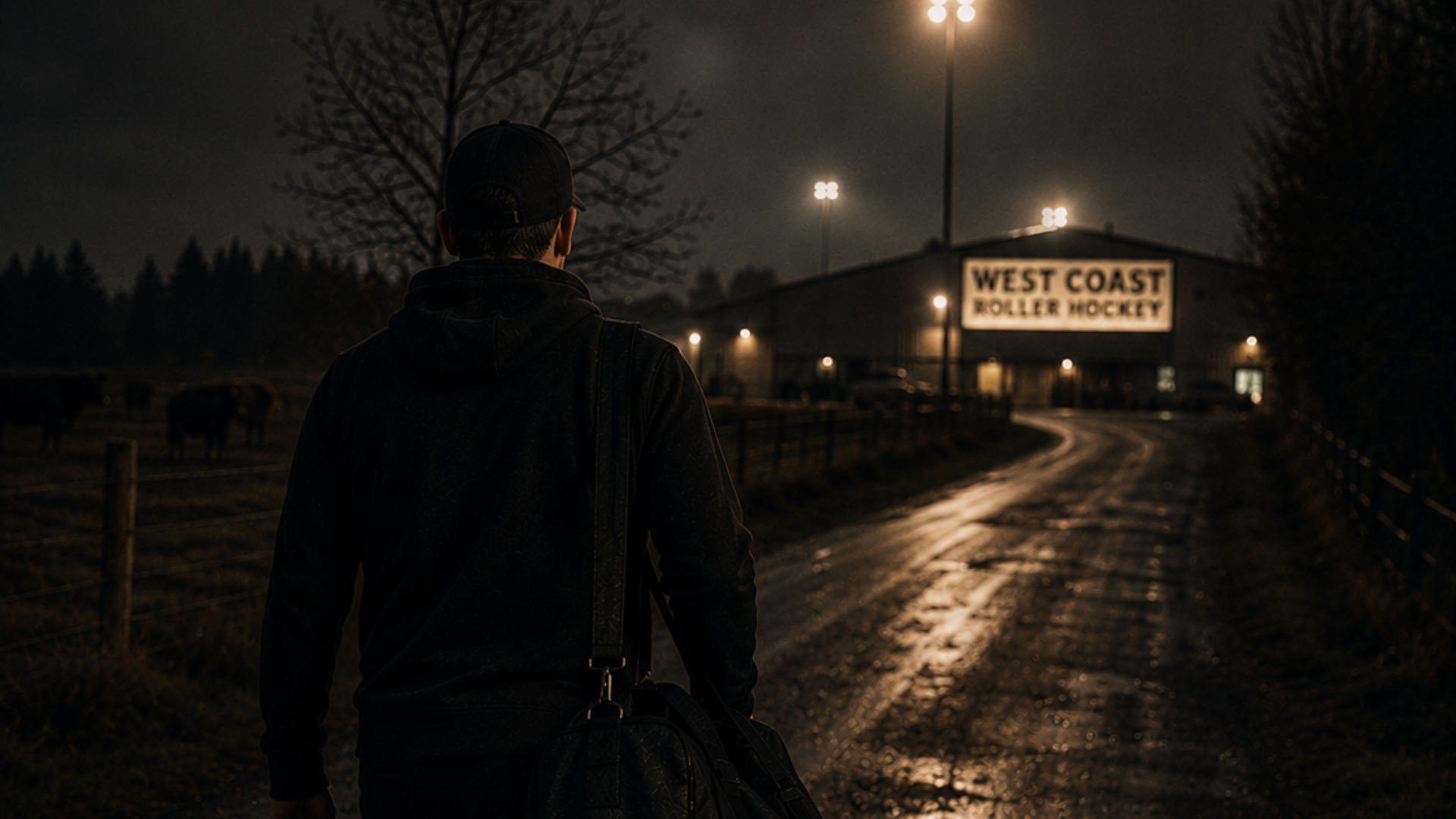
In Vancouver I hit rock bottom. I had worked harder than I ever had, earned a place on a team I had no right to be on, and then stood on the rink completely unable to play. Heavy hands. Thick mental fog. A voice that said I didn't belong.
I tried everything I knew to manage it.
Nothing worked.
And then one night, exhausted and out of options, I stopped trying.
I asked myself what the worst case actually was. I let myself go there. Really go there. And I discovered I could live with it.
Something released.
I didn't know what had happened. I thought it was a technique. Years later, I would write about it in my first book as a model. Accept failure as a possibility, find perspective, and take action in a relaxed state.
What I didn't understand then was that I hadn't found a technique.
I had stumbled, accidentally, onto surrender.
And something — call it luck, call it grace, call it a plan I hadn't been consulted on, took over from there.
I played some of the best hockey of my life. I earned a Nike sponsorship. I represented California in Las Vegas. I stood at a faceoff opposite the player I had modelled myself on and thought: I made it here. Not by forcing it.
By letting go.
When I came back from Vancouver, I believed the hardest part was behind me.
I was wrong.
My girlfriend fell pregnant. We were young. We tried to make it work. What I didn't know, what took years to become undeniable, was that she had a drinking problem.
So from the age of five, Izzie moved in with me.
Just the two of us. No map. No certainty about what came next.
I couldn't fix her mother. I couldn't force the situation to resolve differently. I could only show up day after day for Izzie and trust that something was holding us both.
For seven years, it was just the two of us.
And then Lucie arrived, not planned, not engineered, and became the person I didn't know I had been waiting for.
She was Czech. From Prague. Living in my hometown.
I didn't think anything of it at the time. I was just a man who had fallen in love.
She took on Izzie as her own. We got married. We had two more children. We built something real.
And I proceeded to make a mess of it.
Not dramatically. Quietly. The way people do when they carry old stories they haven't looked at. Emotions I had spent years learning to control leaked under pressure, into the marriage, into the home, into the spaces where I most needed to be present. I created unnecessary drama. I brought chaos into the one place that deserved calm.
Lucie left. We were separated for two years. Every instinct said fight it, be angry, force a resolution, make something happen. The temptation to control the situation was overwhelming. I am not sure I always resisted it.
But slowly, in the space that separation creates, whether you want it or not, I learned to let go of the outcome. Not of her. Not of us. Of my insistence on how it had to be resolved.
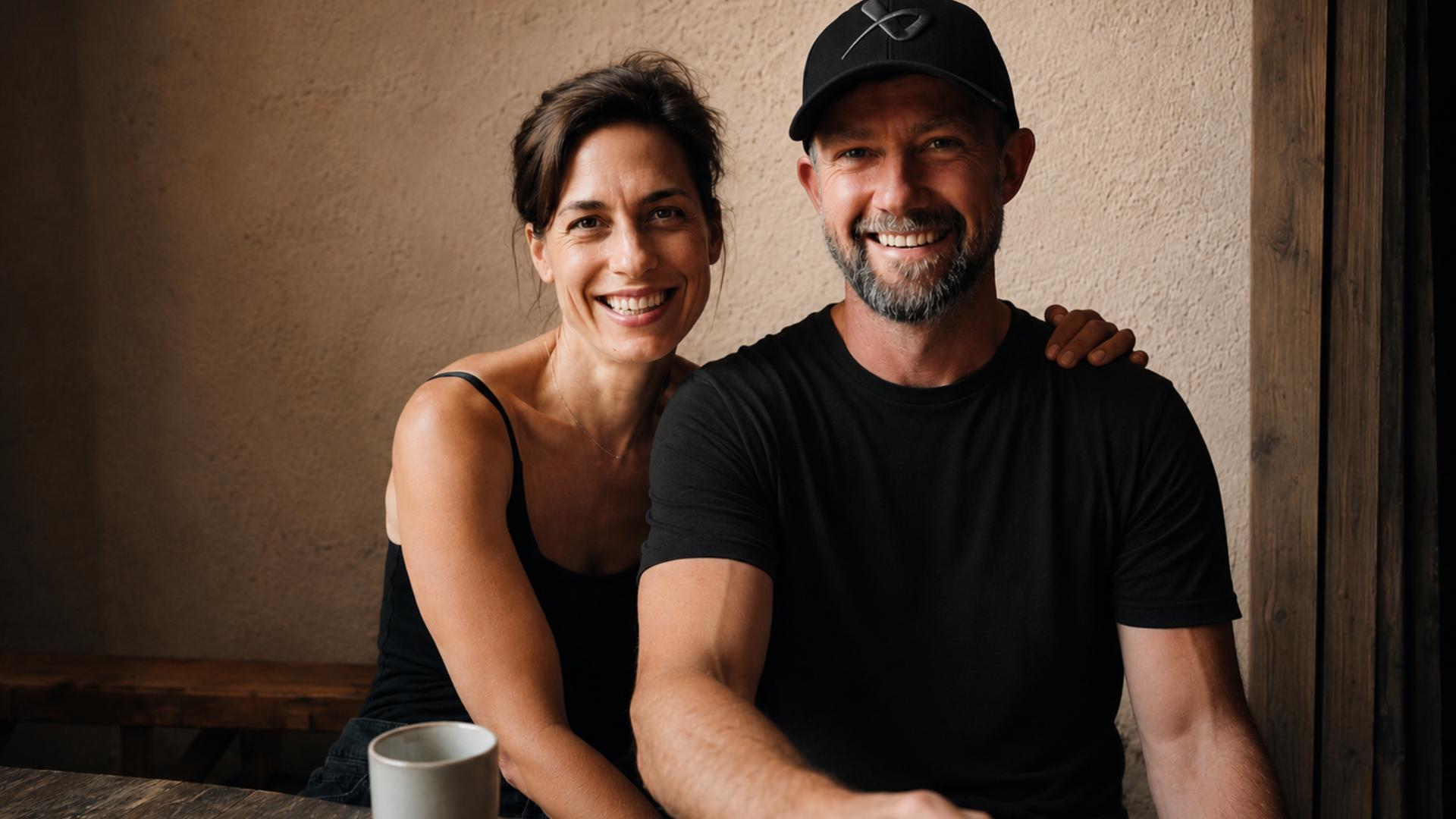
Two years later, we moved to Prague together. Not because I engineered it. Because when I stopped forcing it, something found its own way back.
I couldn't have planned that. I wouldn't have dared.
And Prague — the city she had carried inside her all along — became home.
Shortly after we arrived, my brother was diagnosed with Myeloma cancer.
For eighteen months, I watched the person who had quietly shaped everything, without either of us knowing it, fight to stay in the world.
When the end came, I went back to the UK. I sat with him in the hospice. I held his hand. I said goodbye.
He passed that evening.
Just like my father.
There and then not there.
When my brother died in 2022, that armour cracked. Not gradually. Completely.
I began walking by the Vltava River in Prague. No plan. No technique. Just movement, space, and the sound of water.
Nothing dramatic happened.
But something quieted.
I wasn't looking for a methodology. I was looking for air.
He never saw where Vancouver led. He never saw me become a world champion. He never knew that the book he pressed into my hands on a doorstep in Tunbridge Wells in 1997 had become the thread running through everything.
A thread that eventually became this work.
This is for him.
I want to be clear about something.
This is not about sports psychology. It is my attempt to understand why the greatest performances of my life arrived when I finally stopped trying to control them.
It is not about religion either. I am not asking you to adopt a theology, join a church, or believe what I believe.
What I am asking is simpler and harder than that.
I am asking you to consider, based on the evidence of your own life, whether there is something larger than your own will at work. Whether the things that arrived when you stopped forcing, the doors that opened when you stopped pushing, the people who appeared exactly when you needed them, whether all of that was really just coincidence.
Call it God. Call it the universe. Call it grace, fate, flow, or something you don't have a name for yet.
I call it God. Because that's the honest word for what I experienced on a dark road in Vancouver looking for a rink, on an ice rink in Prague, and in trying to find meaning after losing my father.
You get to call it whatever is true for you.
What matters is that you stop trying to do this alone.
For years, I had been collecting moments I couldn't explain. Then, one week in 2026, everything I thought I knew was put to the test.
In 2026, I was nominated to represent the Czech Republic Veterans Team at the World Championships.
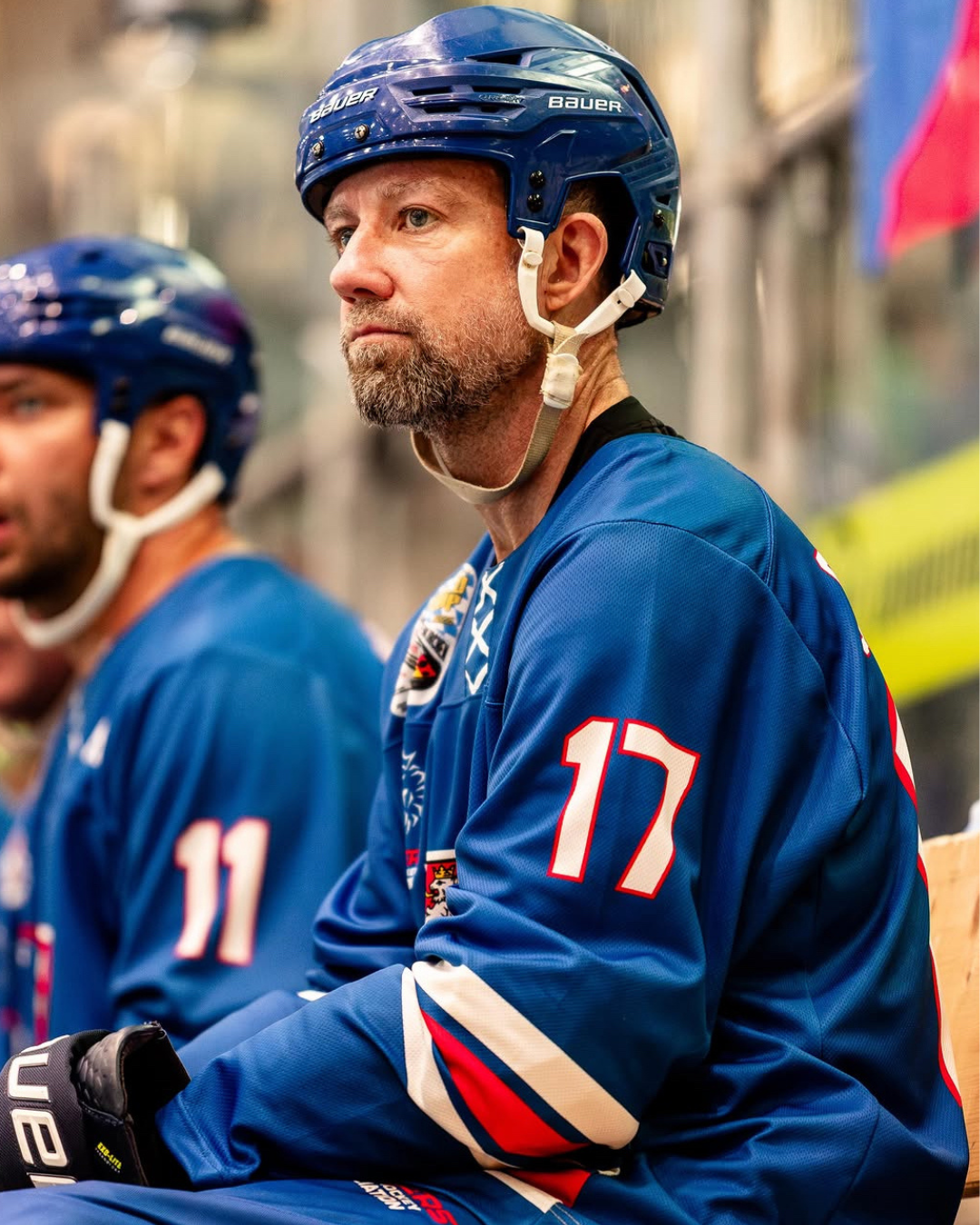
I want you to understand what that meant to me.
This was the team I had followed since the Nagano Olympics in 1998. My wife's home country. A nation that had given me a second home, a river to walk beside, and a life I could never have planned.
And now I was being asked to wear their jersey.
The night before the first game, I sat alone and considered faking illness. The anxiety was that overwhelming. I ran through every excuse. Every reasonable way out. Every story I could tell that would let me disappear without humiliation.
And then something shifted.
Not a technique. Not a breathing exercise. Not a reframe.
A decision.
I made a deal. I don't know who with. God, the universe, a higher power. It doesn't matter what you call it. What matters is that I stopped trying to carry it alone.
I said: I am in your hands. If you help me this week, play with freedom, I will never ignore you again.
And something released.
Not dramatically. Not with a rush of confidence or a sudden certainty. Just — a loosening. The weight I had been carrying lifted slightly. Enough.
I walked onto the rink the next morning and I played.
Not carefully. Not defensively. Not trying not to make mistakes.
I played smart, fast and free.
My teammates noticed. My coaches noticed. People who had never seen me play a single minute of hockey noticed something in the way I moved.
Sweden pushed us to sudden death overtime in the semi-final.
Canada took us to the limit in the final.
Through all of it — the pressure, the stakes, the moments where everything could have unravelled — I remained at peace with the outcome.
Not because I didn't care. Because I had placed the outcome somewhere larger than myself.
We won the 2026 Veterans World Championship.
I am a World Champion.
Nobody can take that away from me.
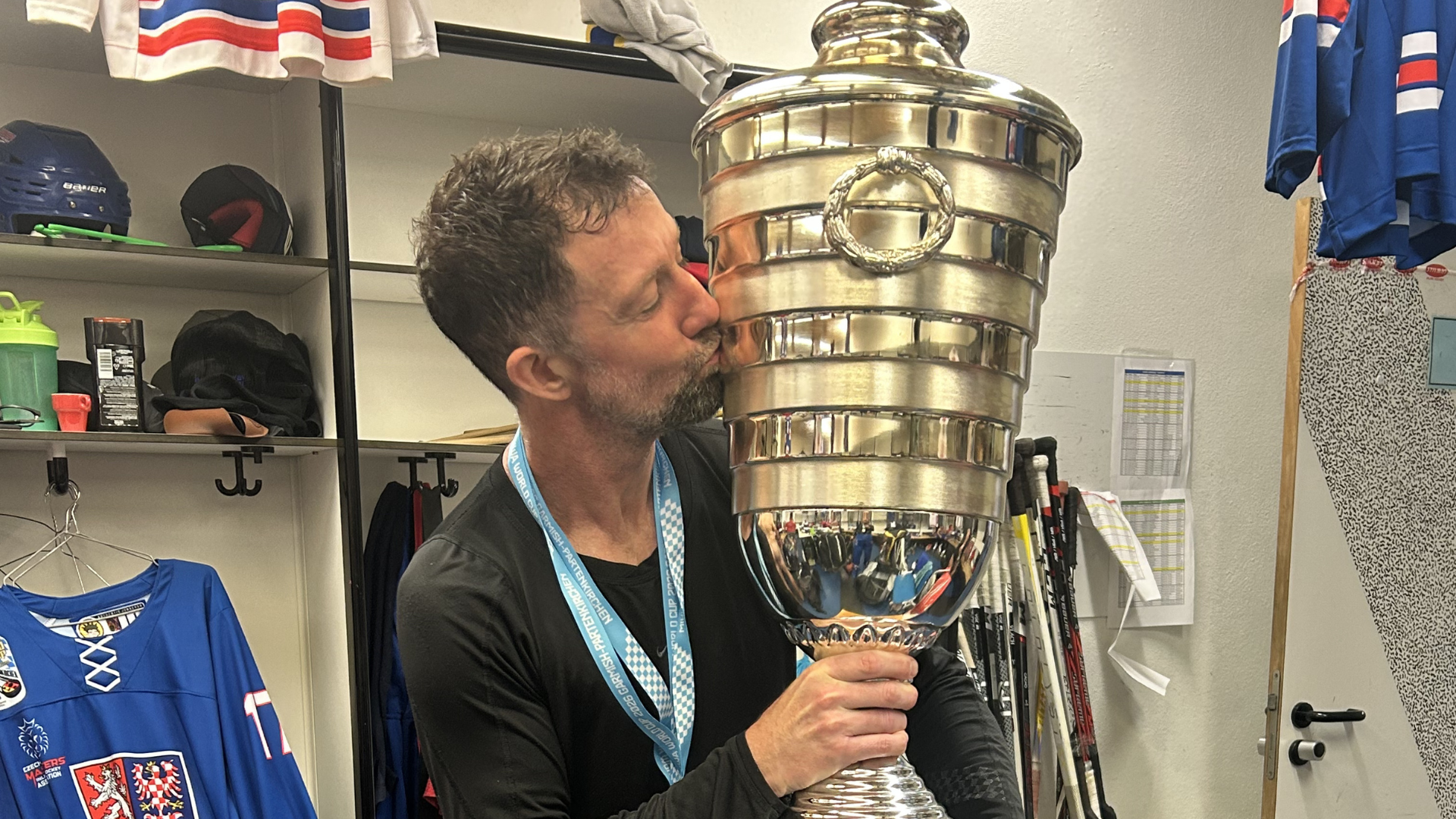
But the gold medal is almost beside the point.
What I experienced that week was the clearest confirmation of something I had been learning since I was nine years old with a hockey stick in my hands. Since I was sixteen sitting with those books in the dark. Since I was twenty-one on a rink in Vancouver with heavy hands and thick fog and nowhere left to turn.
I still don't know whether the plan is written in advance or revealed one step at a time. I only know that every time I have tried to control my own version of life, I have suffered. Every time I have surrendered, something wiser has emerged.
What if you make the mistake that costs the game? What if you are the one who loses the ball at the wrong moment, misses the shot, lets the team down?
What is it trying to teach you?
Looking back on my own life, I have yet to find a wound that didn't eventually become a teacher.
My father's death became my teacher. Vancouver became my teacher. My marriage became my teacher. My brother's death became my teacher.
The plan doesn't promise you won't make mistakes or that bad things won't happen.
It promises that nothing is wasted.
The suffering is always in direct proportion to the tightness of the grip.
This is the account of one life, imperfect, interrupted, repeatedly humbled — as evidence of a single truth.
Life is happening with us, not merely to us.
If this asks anything of you, it is not that you become more disciplined, more positive, or mentally tougher.
It is simply this.
Loosen your grip.
Trust your preparation.
Trust the lesson.
Trust that what feels like an ending may be making room for something you cannot yet see.
There is a plan.
The question is whether you are willing to stop fighting it.
Andrew
Work With Me
If something in this resonated and you'd like to explore working together, the simplest place to start is a one-hour conversation.
$500. Book directly below.