My daughter asked me why we moved to Prague. I gave her the adult answer. She wanted the real one.
We were walking home from school. One of those Prague afternoons where the light is golden and the tram rattles past, and everything looks like a postcard. She was quiet. Which usually means something is coming.
"Dad, why did we actually move here?"
I gave her the version I give everyone. The adventure. The culture. The slower pace. A chance to experience something different as a family. I made it sound considered. Intentional. Like we'd weighed up the options and Prague won.
She looked at me the way children do when they know you're performing.
"That's not the real reason, though, is it?"
It wasn't a question.
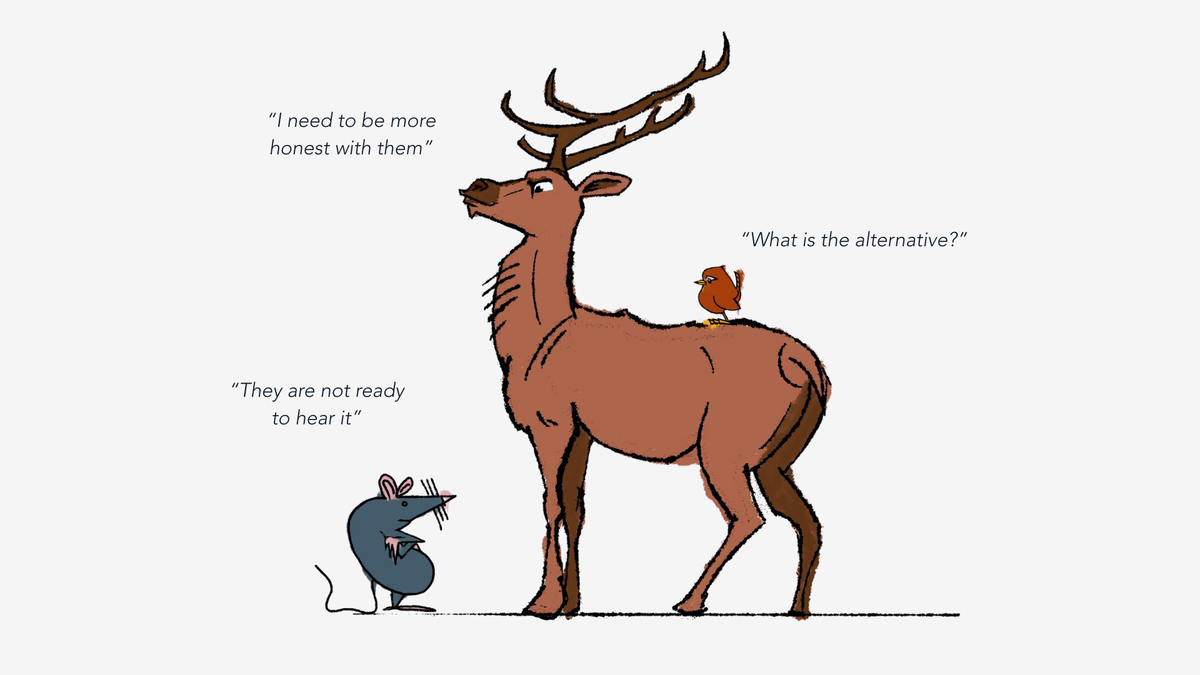
I kept walking. The Rat fired up immediately. She's too young. She doesn't need the full story. Protect her. Keep it light. Don't put your stuff on your kids.
And some of that is true. Children don't need to carry their parents' weight. That's real. That's responsible.
But there's a difference between protecting your child and performing for them. And I'd been performing for my children for years without realising it.
The confident dad. The one who's got it handled. The one who makes the move to a new country sound like a plan rather than an escape. The one who's always fine.
My kids didn't need me to be fine. They needed me to be real.
So I stopped walking.
"We moved because Dad was struggling," I said. "I was tired in a way that wasn't getting better. And I thought coming here might help."
She didn't look shocked. She didn't look scared. She nodded. Like she already knew and was just waiting for me to say it.
"Is it better now?" she said.
"Yes. Not because of Prague. Because I can be daddy again."
She took my hand. We kept walking. And she started talking about her friend at school and whether we could get a dog.
That was it. No drama. No therapy. No damage done. Just a father telling his daughter something true and a daughter receiving it the way children do — simply, without making it bigger than it is.
The Rat told me that conversation would break something. That she'd worry about me. That she'd feel unsafe. That she'd carry it.
She carried nothing. I was the one who'd been carrying — the performance of being fine in front of the people I love most.
That's the thing about the Rat. It doesn't just run your board meetings and your investor calls. It runs bedtime. It runs the school run. It runs the answer you give when your daughter asks a real question and deserves a real answer.
We perform at work, and we tell ourselves it's professional. We perform at home, and we tell ourselves it's protection. But the people closest to you know the difference. They always know. They're just waiting for you to stop.
My wife knew. For years. She told me at forty-two, and I wasn't ready to hear it.
My daughter knew too. She just asked more directly.
If you're an expat in Prague raising children who speak the language better than you and are adapting to the culture faster than you, it's tempting to be the steady one. The strong one. The one who holds it all together so they don't have to worry.
But your children don't need a performance. They need a person.
The conversation you've been avoiding might not be with your co-founder or your investor. It might be with the eight-year-old walking beside you who already knows something is off and is just waiting for you to say it.
I'm Andrew Sillitoe. I help leaders have better conversations. If this resonated, you can find more at andrewsillitoe.com.