Leadership Conversations
A one-day programme for leadership teams

Your leaders are performing, not leading
They hit their targets. They run good meetings. They say the right things in the room.
But something isn’t landing.
Their teams are compliant, not committed. Conversations stay on the surface. Feedback gets managed rather than heard. The people who should be speaking up aren’t — and the leaders who should be listening are too busy having the answer.
It’s not a skills gap. Your leaders know how to communicate. The problem is what’s running underneath the conversation.
Most leadership conversations are shaped by defence, not by presence.
A leader who is defending against being wrong, against losing control, against looking uncertain, cannot listen. They can perform listening. They can nod, paraphrase, and ask open questions. But the person on the other side of the table knows the difference.
Your team knows the difference.
Why communication training doesn’t solve this
Most leadership development programmes teach skills: active listening, feedback frameworks, coaching models, difficult conversation scripts.
Your leaders have done the courses. They can name the frameworks.
But under pressure, something else takes over. The frameworks disappear and the pattern returns: control the room, have the answer, manage perception, don’t get caught out.
That pattern isn’t a skills deficit. It’s a nervous system response. When pressure rises, the brain activates defence before a leader consciously knows what’s happening. The conversation becomes about self-protection, not connection.
No amount of communication training addresses what’s driving the pattern. It teaches people to perform better conversations. It doesn’t teach them to have real ones.
Four voices in every leadership conversation
Leadership Conversations is built on a framework of four voices. Every leader carries all four. Every conversation is shaped by which one is running.
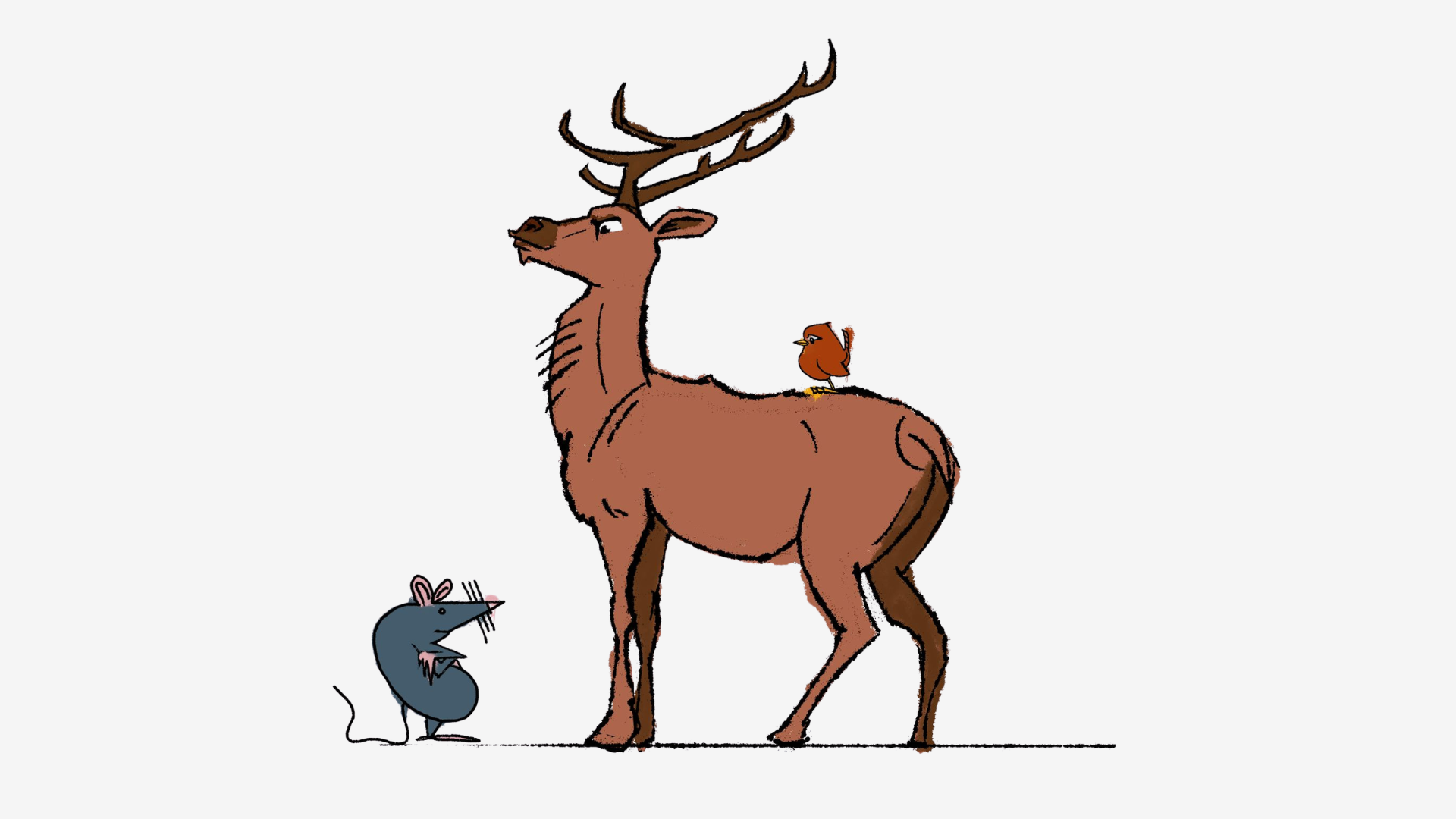
The Stag is the leader under pressure. Carrying responsibility, making decisions, holding the weight. The Stag wants to lead well but is often too braced to be present.
The Rat is the voice of defence. It’s fast, protective, and relentless. In conversations, the Rat shows up as control: having the answer before anyone speaks, managing how things land, steering toward safety rather than truth. The Rat isn’t malicious — it’s trying to protect the leader. But it shuts the conversation down.
The Wren is the quality of inquiry. The question that creates space rather than closing it. When a leader operates from the Wren, they ask the question they’ve been avoiding — and they wait long enough for the answer to arrive. The Wren doesn’t fix. It opens.
The River is the quality of presence underneath the conversation. Non-judgemental. Unhurried. Not trying to solve, fix, or control. When a leader holds the River, their team feels it — not because anything was said, but because the space changed.
Most leaders default to the Rat in conversations. This programme teaches them to recognise the Rat, practise the Wren, and hold the River.
What the day looks like
Leadership Conversations is a one-day, in-person programme for leadership teams of 6–12 people. It’s not a lecture. It’s not role-play. It’s a structured day of real conversations using a shared language that stays in the room long after the programme ends.
Morning: Recognising the pattern
Leaders are introduced to the four voices and learn to identify which one is running in their own conversations. Through short dialogues and paired exercises, they begin to hear the Rat — in themselves, not just in others. This is where the shift begins: the recognition that defence has been shaping their leadership conversations without their awareness.
Midday: Practising the Wren
The second session focuses on the quality of inquiry. Leaders practise the kind of questions that create genuine space — not coaching-model questions designed to lead someone to a predetermined answer, but real questions born from curiosity. They learn the difference between asking to understand and asking to steer.
Afternoon: Holding the River
The final session is about presence. Leaders practise what it feels like to hold a conversation without controlling it. To listen without preparing a response. To sit with silence without filling it. This is where the Wren and the River converge — the leader becomes someone their team can actually speak to.
Each participant leaves with the four-voice framework, a personal recognition of their default pattern, and a shared language their team can use immediately.
What changes after the programme
Leaders have real conversations, not performed ones. When the Rat is recognised, leaders stop controlling every exchange. Meetings shorten. Decisions improve. The people who weren’t speaking up start speaking.
Feedback becomes possible. Most feedback fails because the person giving it is defending and the person receiving it is defending. When both can recognise the Rat, feedback becomes a conversation instead of a confrontation.
Trust deepens. Teams don’t trust leaders who perform confidence. They trust leaders who are present. When a leader stops managing perception and starts being in the room, the team responds.
A shared language stays in the room. "That’s the Rat talking" becomes something a team can say to each other — without blame, without confrontation. The framework gives people a way to name what’s happening in a conversation without making it personal.
The culture shifts from defence to presence. Not overnight. But the day creates a crack. And what comes through that crack — honesty, curiosity, real listening — compounds over time.
How this differs from other programmes
This is not communication skills training. Your leaders don’t need more frameworks for how to structure a conversation. They need to understand what’s been hijacking the conversation before it starts.
This is not executive coaching scaled down. It’s a shared experience for a team that builds a common language and shared awareness.
This is not mindfulness. There are no breathing exercises or meditation. The neuroscience is real — limbic system regulation, threat response, the gap between intention and behaviour under pressure — but it’s delivered through story and recognition, not theory.
The four-voice framework is memorable because it’s simple. A leader doesn’t need to remember a model. They need to hear the Rat. Once they hear it, they can’t unhear it. That’s where the change starts.
About Andrew Sillitoe
Andrew is a former international athlete and Team GB head coach. He holds an MSc in Organisational Psychology and ICF coaching certification. He has spent seventeen years working with leaders and teams under pressure.
He is the author of Taming the Rat: Stories from the Vltava River and three previous books on leadership. His four-voice framework — the Stag, the Rat, the Wren, and the River — has been developed through thousands of hours of coaching conversations with founders and senior executives.
Andrew lives in Prague, where he runs intensive one-day sessions by the Vltava River for individual leaders. The Leadership Conversations programme brings the same framework into organisations for leadership teams.
Bring Leadership Conversations to your organisation
Format: One-day, in-person programme for leadership teams of 6–12
Investment: From £3,000 + VAT
Location: At your offices or a venue of your choice
Includes: Pre-programme briefing, full day facilitation, participant materials, follow-up summary
To discuss whether this is right for your team:
andrew@andrewsillitoe.com
andrewsillitoe.com
"That’s the Rat talking."
Once your team hears it, they can’t unhear it.