I walk along the Vltava most mornings. I didn't start because it was good for me. I started because I had nothing else.
I want to be honest about this because the way people talk about morning routines makes me uncomfortable.
Cold plunges. Gratitude journals. Meditation apps. Five habits before 5am. Men turning their mornings into performance reviews for their own nervous systems.
I did all of it. I taught others to do it. And it works — for a while. It resets the system. It clears the noise. It gives you the feeling of control on a morning when everything else feels uncontrollable.
But a reset isn't a reckoning. It's a doctor prescribing medication without asking what's causing the pain.
You can plunge into cold water every morning and still avoid the conversation you need to have. You can journal your gratitude and never write down the thing that's actually wrong. You can meditate for twenty minutes and spend the other twenty-three hours and forty minutes performing.
I know because that's exactly what I did.
I didn't start walking by the river because I discovered something better. I started because my brother had just died, and none of the resets worked anymore.
There was no intention. No ritual. No plan to make it a practice. I just needed to move. And the Vltava was there.
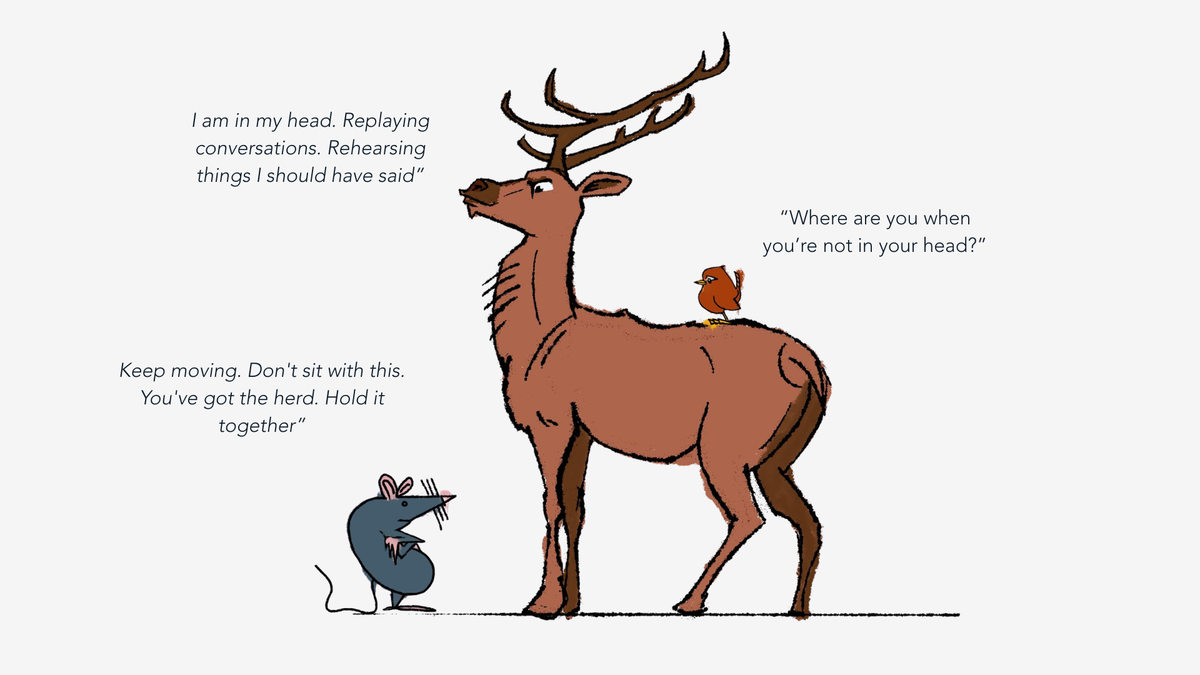
The first few weeks, I didn't notice the river at all. I was in my head. Replaying conversations. Rehearsing things I should have said to my brother while he was alive. Running through everything I needed to do that day, that week, that month — as if productivity could outrun grief.
The Rat was loud. It always gets loud when the ground falls away. Keep moving. Don't sit with this. You've got clients. You've got children. You've got a life to hold together. Grieve later. Grieve efficiently. Grieve on the walk and then get back to work.
So that's what I did. I grieved efficiently. On a schedule. Between the flat and the café. Forty-five minutes of walking and feeling, then back to performing.
But the river doesn't care about your schedule.
Some mornings I'd plan to walk for thirty minutes and I'd still be out there two hours later. Not because I was being mindful. Because my legs wouldn't take me home. Something in my body knew I wasn't done, even when my mind said I was.
The Vltava does something I've never experienced anywhere else. It sets a pace that isn't yours.
In a meeting, I set the pace. In a coaching session, I hold the pace. At home, the children set the pace. On the hockey rink, the game sets the pace. Everything in my life has a tempo that someone is controlling.
The river has its own tempo. And it doesn't negotiate.
It moves the same whether I'm anxious or calm. Whether I've slept or haven't. Whether the day ahead is full or empty. It flows at the speed it flows, and after a while, without deciding to, you match it.
That's when the noise drops.
Not silence. I'm not talking about meditation. I'm talking about the volume turning down enough that you can hear what's actually playing. The thing underneath the to-do list. The feeling behind the performance. The question you've been stepping over every morning because answering it would require you to stop.
For me, the question was: who am I without something to fix?
My whole life, I'd been the fixer. The one who steps forward. The one who holds it together. When my dad died, I felt like everything was broken and needed fixing. When my career stalled, I fixed the plan. When my marriage struggled, I tried to fix that too — with a move to Prague, with effort, with strategy.
The river didn't need fixing. And it didn't need me.
That was the most uncomfortable thing about it. I was irrelevant to the Vltava. It flowed before I arrived, and it would flow long after I left. My problems, my grief, my identity as the man who holds everything together — the river had no opinion about any of it.
And in that irrelevance, something released.
I didn't have to be anything by the river. I didn't have to perform recovery. I didn't have to grieve correctly. I didn't have to turn my pain into a framework or a lesson or a LinkedIn post. I just had to walk.
Some mornings I cried. Some mornings, I felt nothing. Some mornings, I noticed the light on the water and for a few seconds forgot everything I was carrying. Those seconds were the most rest I'd had in years.
I still walk most mornings after the school run. It's not a routine. Some days I skip it. Some days, I only make it to the bridge and turn back. Some days I walk for an hour and come home with something I need to write down. Some days I come home with nothing.
The river doesn't care either way.
I tell you this because if you live in Prague, the Vltava is right there. You've probably walked past it a thousand times. You might even run along it or cycle beside it.
But there's a difference between using the river and being with it.
Using it is exercise. Being with it is surrender. And surrender — not the dramatic kind, the quiet kind, the kind where you stop managing the moment and let it be what it is — that's where the real things surface.
You don't need to fly somewhere for a retreat. You don't need a cabin in the mountains or a week of silence. You have a river running through your city that has been there for longer than anyone can remember.
Walk beside it tomorrow morning. Don't listen to a podcast. Don't check your phone. Just walk. And notice what comes up when you stop managing the pace.
That's where it starts.
I'm Andrew Sillitoe. I help leaders have better conversations. If this resonated, you can find more at andrewsillitoe.com.